Do Veneers Look Natural? Myths and Facts Explained
If you have ever seen a smile that looked a little too white, a little too flat, or strangely identical from tooth to tooth, you have probably wondered whether veneers always look fake. It is a fair question, and one that comes up often in cosmetic dentistry consultations. People are not usually afraid of veneers themselves. They are afraid of ending up with a smile that announces dental work before they say a word.
The short answer is simple: veneers can look extremely natural, but they do not automatically look natural. The result depends on planning, tooth preparation, material choice, the skill of the dentist and ceramist, and perhaps most importantly, whether the design respects the patient’s face rather than chasing a trend.
That distinction matters. Veneers are not a filter. They are tiny custom restorations bonded to the front of the teeth, and they sit in the center of the face. A good result blends in with skin tone, lip shape, age, and even personality. A poor result can look stiff or artificial, even if the work itself is technically well made.
Why veneers get a reputation for looking fake
Much of the skepticism around veneers comes from highly visible celebrity cases, social media before-and-afters, and older cosmetic work that prioritized brightness over realism. For years, many people associated veneers with the same hallmarks: blinding white shade, bulky edges, oversized central incisors, and a uniform shape across all visible teeth.
That look was never inevitable. It was a style choice, sometimes driven by patient preference, sometimes by rushed treatment, and sometimes by limitations in technique or materials. Dentistry has changed. Ceramic systems have improved. Digital planning is more precise. Dentists now pay closer attention to translucency, texture, and the way light passes through enamel. The best veneers today are often invisible to anyone who is not trained to look for them.
Still, natural-looking work requires restraint. The biggest cosmetic mistakes usually happen when veneers are treated like a one-size-fits-all makeover. Real teeth are not identical. They have tiny differences in contour, slight asymmetry, subtle surface texture, and varying degrees of translucency from the neck of the tooth https://daltonrdyd459.quillnesty.com/posts/how-to-budget-for-veneers-without-stress to the edge. When those details disappear, the smile starts to look manufactured.
The biggest myth: veneers always look like “Turkey teeth”
The phrase gets used loosely online, often unfairly. It usually refers to crowns or veneers that are too large, too opaque, or too aggressively prepared. The country itself is not the issue. The issue is over-treatment, poor planning, or a style of cosmetic dentistry that favors obvious transformation over believable harmony.
Well-done veneers do not have to look square, thick, or unnaturally white. In fact, the most successful cases are often the ones friends cannot identify. Someone notices that a person looks rested, healthier, or somehow more polished, but they cannot quite say why.
A natural veneer case rarely tries to erase every characteristic. Sometimes a patient has a slight asymmetry that is part of their charm. Sometimes the right move is to soften a chip, close a small gap, or improve color while preserving age-appropriate anatomy. A forty-five-year-old smile should not necessarily look like a digitally edited version of a nineteen-year-old smile. Good cosmetic dentistry respects that.
What actually makes veneers look natural
There is no single magic ingredient. Natural-looking veneers come from a combination of biological sense and artistic judgment.
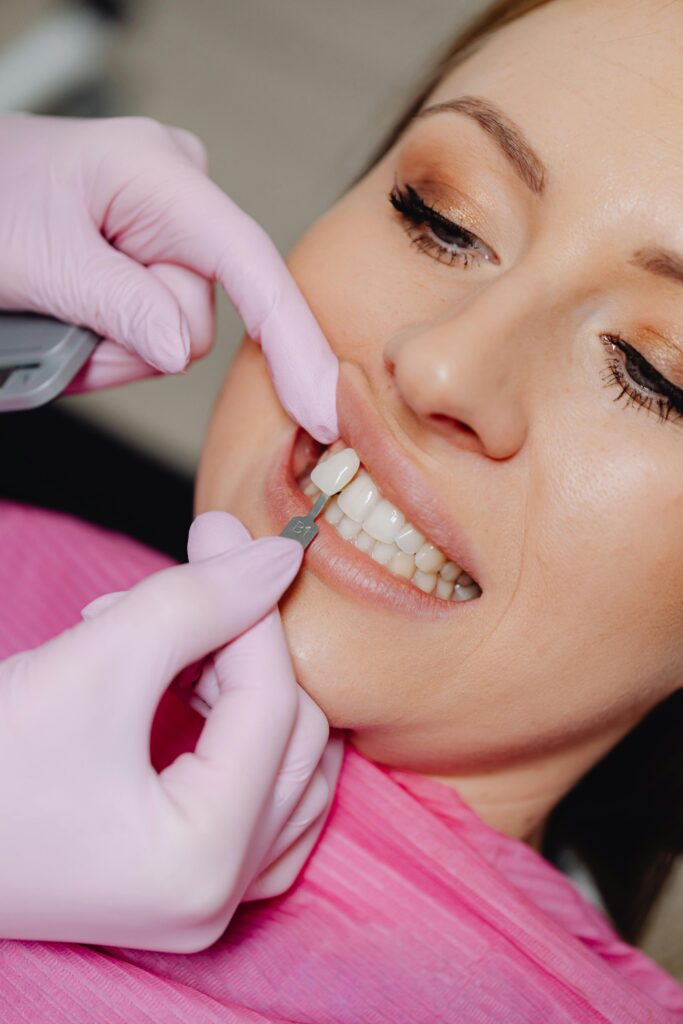
Color is the first thing people think about, but it is not just about choosing a shade. Real teeth are not one flat color. They tend to be slightly warmer near the gums, more translucent toward the edges, and reflective in a way that changes under daylight, restaurant lighting, and flash photography. If veneers are too opaque, they can look chalky. If they are too bright for the complexion, they can dominate the face.
Shape matters just as much. Teeth should fit the lips and face, not just an idealized smile template. Longer teeth can look elegant on one person and severe on another. Rounded edges may soften the smile. Squarer shapes may suit stronger facial features. The centrals, laterals, and canines should not all look cloned from the same mold.
Texture is another detail most people notice subconsciously. Natural enamel has microtexture that catches light. Some veneers are polished so flat and smooth that they reflect light like tiles. They may look impressive in a clinic mirror and strangely artificial in real life.
Then there is proportion. Veneers that are too bulky often result from insufficient planning, minimal attention to bite, or a desire to avoid removing any tooth structure while still changing shape dramatically. In practice, “no-prep” or “minimal-prep” veneers can be excellent for the right case, but they are not appropriate for every patient. If a tooth already projects outward and a veneer is simply added on top, the result can look puffy or overcontoured.
The preparation question patients often misunderstand
Many people assume that the less a dentist touches the teeth, the more natural the result will be. That is not always true. Conservative dentistry is important, but cosmetic dentistry is full of trade-offs.
Sometimes a tiny amount of enamel reduction creates space for the ceramic so the veneer can sit naturally within the smile rather than on top of it. Without that space, edges can look thick and the profile can feel heavy. On the other hand, over-preparation is a real concern and can unnecessarily weaken the tooth or commit a patient to more extensive future treatment.
The most natural result usually comes from the most appropriate amount of preparation, not automatically the least. That decision should be made tooth by tooth, based on alignment, existing restorations, enamel quality, and the desired change.
A patient with small, worn teeth may need very little preparation and get a beautiful result. A patient with prominent teeth, old bonding, and moderate crowding may need more planning, possibly even orthodontics before veneers, to avoid that bulky look people fear.
Material matters, but it is not the whole story
Porcelain veneers, more accurately ceramic veneers, have earned their reputation because high-quality ceramics can mimic enamel remarkably well. They resist staining better than composite and can hold nuanced color and translucency. Composite veneers can also look good, especially in skilled hands, but porcelain typically offers more lifelike optical qualities and longer wear.
That said, material alone does not guarantee realism. A talented clinician can make composite look very natural, and a poor design in premium porcelain can still look artificial. The laboratory work is crucial. The ceramist is not just manufacturing a shell. They are building depth, light behavior, internal character, and edge effects.
The best cosmetic dentists work closely with labs that understand facially driven design. They communicate with high-quality photos, videos, shade maps, and temporary mock-ups. That collaboration is often what separates acceptable veneers from exceptional ones.
Myths patients bring into consultations
People often arrive with a set of assumptions, some understandable, some misleading.
One common myth is that all veneers require “shaving down” the teeth into pegs. That image usually comes from full crowns, not modern conservative veneer cases. Veneers can involve minimal preparation, though not always none. Another myth is that if the teeth are white enough, they will automatically look better. In reality, overly bright teeth can look less healthy and less refined than a softer, believable shade.
There is also a belief that every visible tooth needs treatment. Sometimes the most natural cosmetic plan involves whitening, orthodontics, bonding, and perhaps a few veneers rather than eight or ten veneers by default. Good treatment planning is selective. It solves the aesthetic problem with the least invasive effective approach.
Then there is the social media myth that dramatic before-and-after photos represent ideal outcomes. They often reflect dramatic differences, but drama is not the same as beauty. Some of the finest veneer work photographs modestly because it preserves individuality.
Signs that veneers are likely to look natural
A few clues can help when you review a dentist’s portfolio or evaluate a proposed treatment plan.
- The smiles vary from patient to patient rather than repeating one identical look.
- The tooth color suits the person’s skin tone, age, and overall features.
- The front teeth show subtle translucency and texture instead of a flat, opaque white.
- The teeth fit the lips and face without looking bulky from the side.
- The before-and-after results improve harmony without erasing all natural character.
If every case looks intensely white, perfectly symmetrical, and very similar in shape, that tells you something about the dentist’s aesthetic style. Some patients want that look. Many do not. The key is matching style to the person, not forcing every smile into the same formula.
The role of temporary veneers and mock-ups
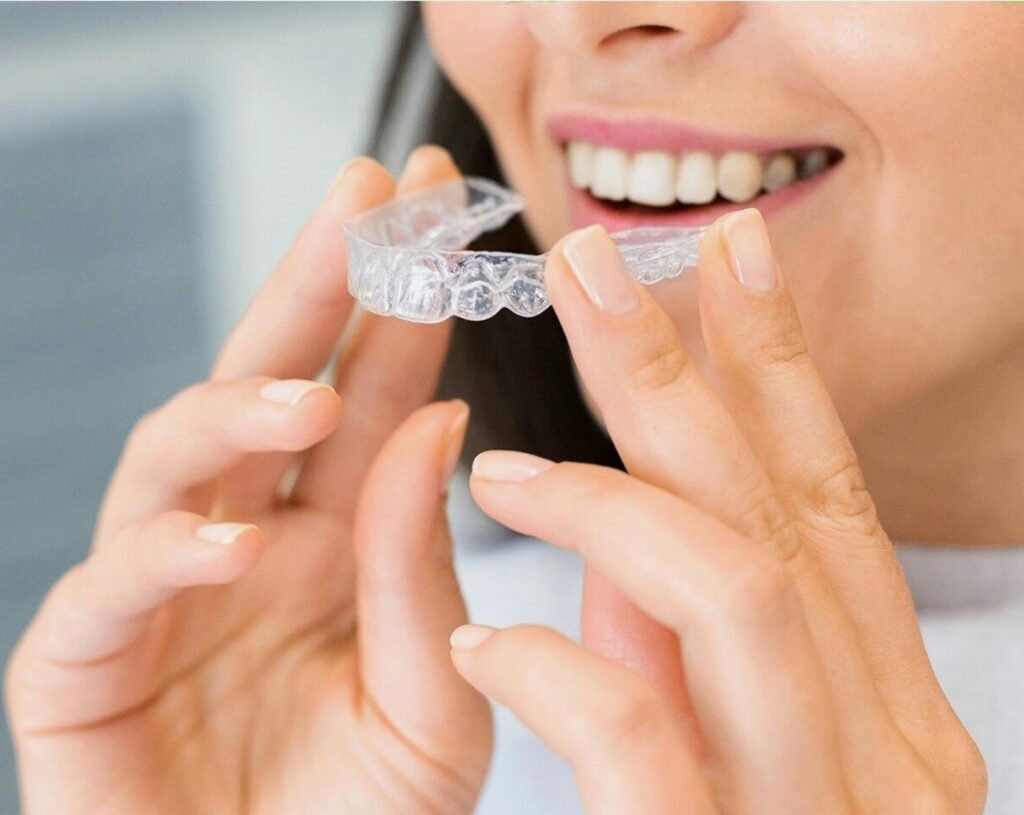
One of the smartest ways to avoid an unnatural result is to test the design before final ceramics are made. Many experienced cosmetic dentists create a wax-up or digital design, then transfer that concept into temporary veneers or a mock-up placed in the mouth. This lets the patient see length, shape, speech changes, and smile line before the final restorations are fabricated.
This stage often reveals issues that are hard to predict on a screen. A patient may realize the teeth feel too long when speaking. A dentist may notice that one canine dominates the smile in motion, even though it looked fine in still photos. Small refinements at this stage can make a big difference in the final result.
Patients who skip this step to save time or money sometimes regret it. Veneers are highly visible and not easily undone. A trial smile is one of the most practical safeguards against ending up with a look that feels foreign.
When veneers look less natural, even if the dentistry is technically good
Not every artificial-looking smile is a bad dental job. Sometimes the work is beautifully crafted, but the design choice is simply too aggressive for the patient’s features.
A common example is over-whitening. A very bright shade can look clean in a clinic setting and harsh in daylight, especially on patients with warmer skin tones or mature facial features. Another issue is over-lengthening. Longer teeth can make a smile more youthful in some cases, but beyond a certain point they can create a horsey or overly dominant appearance.
Uniformity is another trap. Natural smiles have rhythm. Central incisors lead, laterals soften the line, canines anchor the corners. When every tooth is the same width, same brightness, and same surface character, that rhythm disappears. The smile becomes static.
Bite also plays a role. If veneers are designed without properly accounting for how the upper and lower teeth meet, edges can chip, wear unnaturally, or force shapes that compromise aesthetics. Natural appearance is not separate from function. Function supports longevity, and longevity supports beauty.
Veneers and age: what looks natural at 25 may not look natural at 60
This is a subtle but important point. Younger teeth usually show more luster, brighter enamel, and slightly more rounded edge detail. Over time, enamel wears, edges flatten, and color warms. Cosmetic dentistry does not need to mimic aging, but it should not ignore it either.
A very youthful veneer design can look striking on a younger patient and oddly disconnected on an older one. That does not mean older patients should choose dull or dark teeth. It means the design should reflect the whole face. Sometimes a touch of warmth and softer translucency looks far more elegant than the brightest possible shade.
This is where experience matters. Dentists who do a lot of cosmetic work learn that beauty is often about calibration. Enough improvement to refresh the smile, not so much that it looks detached from the person.
Are veneers obvious up close?
Sometimes, to a trained eye, yes. To most people, not necessarily.
Dentists, hygienists, and ceramists often spot veneers because they know what to look for: margins, polish, edge translucency patterns, or the way light reflects. Friends, coworkers, and strangers usually do not notice unless the veneers are especially bright, bulky, or uniform.
One practical truth is that natural appearance is judged in motion, not just in close-up still images. Smiles are seen while talking, laughing, and turning in different light. A veneer case that looks realistic from conversational distance is doing its job, even if a dentist examining from inches away can tell restorations are present.
That is why heavily edited before-and-after photos can be misleading. The real test is how the smile behaves in life.
Who is most likely to get a natural result?
Patients who have clear goals and flexible expectations tend to do well. They want improvement, not a costume. They understand that natural teeth are not perfect and that a little individuality often makes the outcome stronger.
The dentist matters just as much. Cosmetic dentistry sits at the intersection of health care, engineering, and portrait art. Technical competence is essential, but so is taste. Not every dentist who offers veneers has deep cosmetic training, and not every dentist with cosmetic training shares the same aesthetic philosophy.
A strong consultation often feels more like a design discussion than a sales pitch. The dentist asks what bothers you, what you like in other smiles, how white you want to go, whether you want people to notice the change, and how conservative you want the treatment to be. They study your face at rest and in motion. They do not just point at a shade tab and start counting teeth.
Questions worth asking before you commit
These questions can quickly tell you whether a dentist is aiming for a natural result and has a process to support it.
- Can I see examples of veneer cases that look subtle, not just dramatic?
- Will you show me a mock-up or temporary version before the final veneers are made?
- How much tooth preparation do you expect, and why is that amount necessary?
- What shade range would suit my face, rather than just the whitest option?
- If veneers are not the best answer for every front tooth, what alternatives would you suggest?
The last question is particularly revealing. A thoughtful dentist is comfortable saying that whitening, orthodontics, gum contouring, or bonding may be better for part of the problem. When every aesthetic concern somehow leads to the same full set of veneers, caution is warranted.
The trade-offs people should understand
Natural-looking veneers are not only about aesthetics. They also involve maintenance, longevity, and cost. Even excellent veneers are not permanent in the sense many patients imagine. They can last well for many years, often into the low teens or longer in favorable cases, but they may eventually need repair or replacement. Gum changes, edge wear, bite forces, grinding habits, and aging of surrounding teeth can alter the way they look over time.
Shade selection creates a trade-off too. A very bright veneer shade can resist coffee and red wine staining better than natural teeth simply because ceramic is stable, but adjacent untreated teeth may darken over the years, creating mismatch. If only a few veneers are placed, color planning becomes even more important.
There is also the emotional side of cosmetic treatment. People sometimes pursue a dramatic smile makeover hoping it will feel instantly right, only to discover that the biggest change is also the hardest to adapt to. A more natural design often ages better and feels familiar faster.
So, do veneers look natural?
They can, very much so. Some of the best veneer cases are impossible to detect unless you know the patient’s original smile. But that result is earned, not assumed. It comes from careful diagnosis, conservative planning where appropriate, excellent materials, realistic shade choices, and a dentist and ceramist who understand that natural beauty is nuanced.
If you are considering veneers, the right mindset is not “How perfect can my teeth become?” but “How believable can this improvement be on my face?” That shift changes everything. It leads to better questions, better planning, and usually a better outcome.
The most convincing veneers do not scream cosmetic dentistry. They simply look like healthy, attractive teeth that belong to the person wearing them. That is the standard worth aiming for.
Oaks Dental
Address: 5000 Parkway Calabasas Ste 308, Calabasas, CA 91302
Phone number: +18184312000
FAQ About Veneers
How much do veneers actually cost?
The cost of dental veneers typically ranges from $250 to $2,500 per tooth, with a full smile transformation averaging anywhere from $6,000 to $20,000 depending on the material you choose. Because veneers are classified as a elective cosmetic procedure, dental insurance almost never covers them.
What is the downside of having veneers?
The main downside of dental veneers is that the process is permanent and irreversible, as a dentist must shave off a thin layer of natural tooth enamel. Other major drawbacks include increased tooth sensitivity, high financial costs, and the need to replace them every 10 to 15 years.
What happens to the teeth under veneers?
When you get veneers, a dentist shaves off a thin layer of your natural tooth enamel (about 0.3 to 0.7 millimeters). The living tooth stays intact underneath, but losing this outer layer is permanent. The tooth relies on the veneer shell for lifelong protection and cannot be left bare.